Describe
Record shape, posture, count, direction, damage, letters and material before naming the motif.
Identify cemetery symbols, decode old inscriptions and compare monument forms with a source-aware method that makes uncertainty visible.
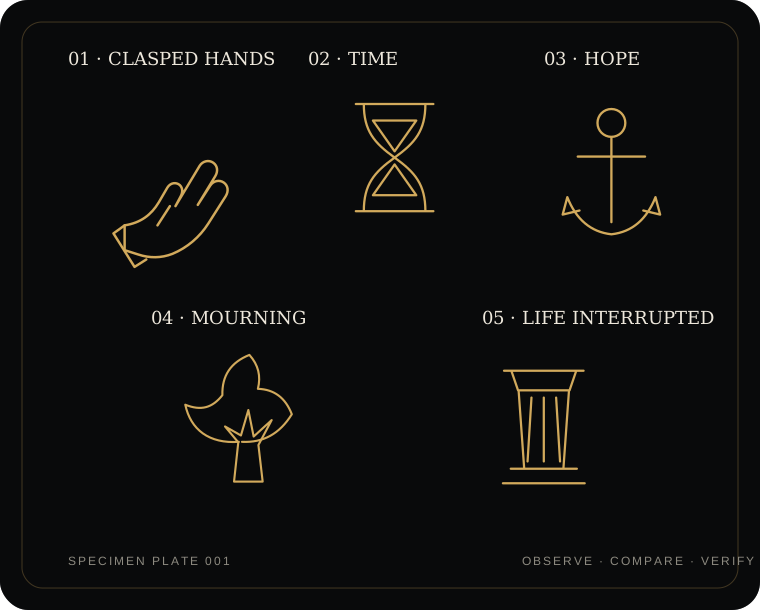
Choose what you can actually see. Each collection explains the clues that matter and the mistakes that produce false identifications.
Gestures, angels, mourners and human figures whose pose changes the reading.
Botanical carvings associated with memory, mourning, resilience, life cycles and faith.
Creatures used as religious signs, emblems of character, childhood imagery or personal motifs.
Objects, instruments, occupational tools and symbolic memorial forms that may point to belief, work or identity.
Crosses, monograms and belief emblems that require careful denominational and cultural context.
Vanitas imagery about death, time, the soul and the ending of earthly life.
Lodge, veterans, hereditary, mutual-aid and civic emblems identified by exact combinations.
Stars, circles, rays, knots and abstract forms whose meaning depends heavily on context.
Most symbol lists jump straight to meaning. Grave Symbols begins with observation and shows how to verify a tentative reading.
Record shape, posture, count, direction, damage, letters and material before naming the motif.
Use visually similar entries and exact emblem combinations instead of one broad resemblance.
Check inscription, date, cemetery section, family stones and local religious or organizational history.
Link the interpretation to a source and the biography to a record—not to the carving alone.
Each page gives a direct answer, recognition clues, historical limits, comparison links and source notes.
farewell, continuing attachment, marriage, reunion, or fraternal fellowship depending on cuffs and context
Open field entry
a life interrupted before its natural completion
Open field entry
mourning and grief in the cited cemetery context
Open field entry
time flies and life passes swiftly
Open field entry
hope, steadfastness, Christian faith or a seafaring life
Open field entry
innocence, Christ and—frequently—childhood
Open field entry
Independent Order of Odd Fellows affiliation, especially when the links contain F, L and T
Open field entry
a life cut down, naturalistic mourning or—when paired with exact emblems—a fraternal association
Open field entryThe finder narrows the dictionary by visual family, physical feature and likely context. It never asks you to upload a photograph or surrender field data.
Photograph carefully, transcribe exactly, separate damage from design and preserve the original context.
A repeatable field method for moving from visual description to a cautious, source-backed identification.
Field guide02How symbol clues can lead to church, lodge, military, occupational and family records without replacing primary evidence.
Field guideDownload structured JSON or CSV containing names, aliases, cautious meanings, categories, evidence labels and source IDs. The original dataset and illustrations are published under CC BY 4.0.
Explore the dataset